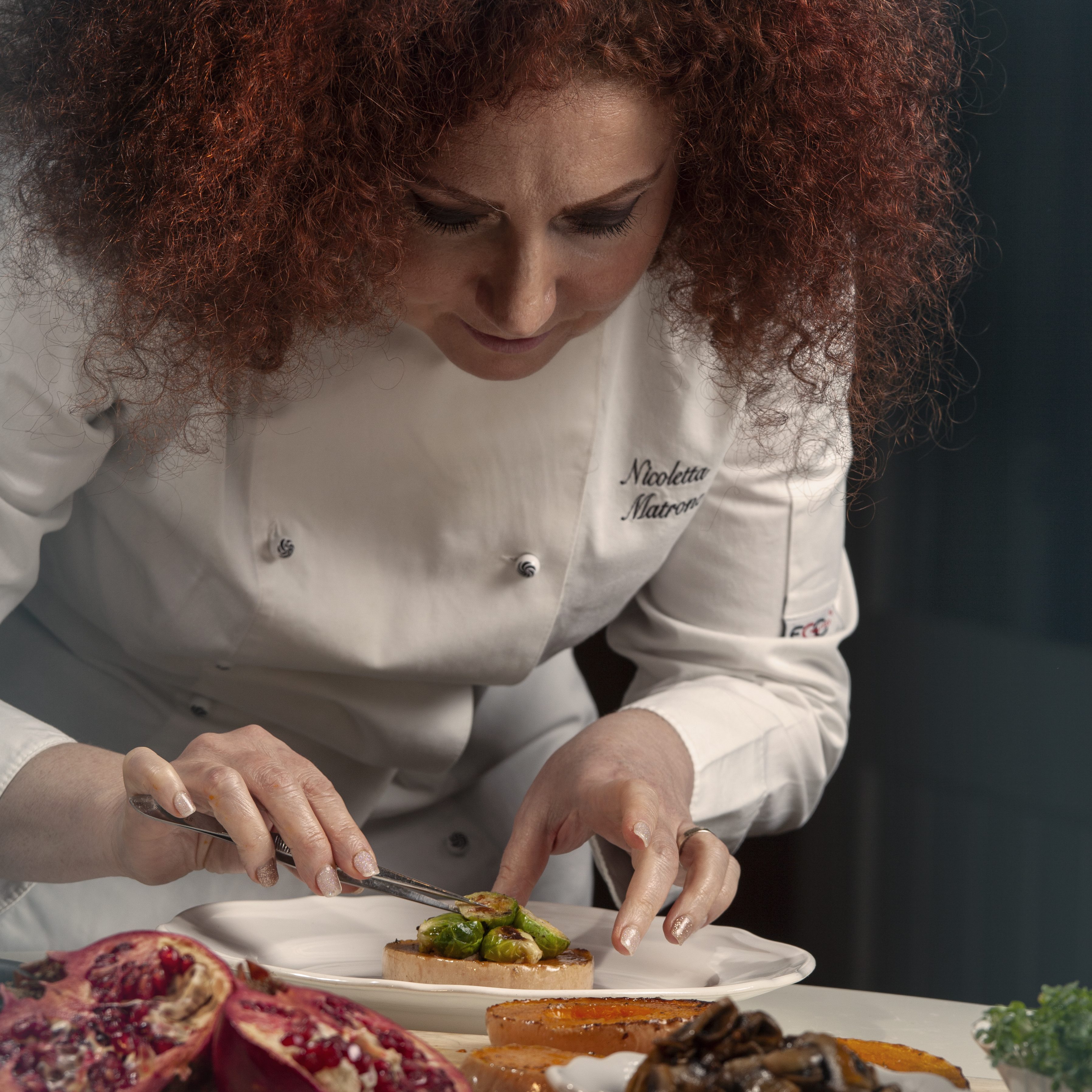
For Chef Nicoletta Matrone, plant-based cooking isn’t just about replacing meat – it’s about rethinking food from the ground up. With a background in international cooperation and development, Nicoletta brings a deeply thoughtful and inclusive approach to plant-based cuisine. She thinks that “Peace, nonviolence and cooperation can start at the table”. Her work isn’t about imposing dietary rules; instead, she creates sustainable dishes that welcome everyone to the table, no matter where they are on their journey with food.
Beyond Restriction: A Culinary Philosophy of Inclusion
Unlike many plant-based chefs who position themselves in opposition to traditional cuisine, Nicoletta sees plant-based eating as an expansion, not a limitation. Her philosophy is rooted in the belief that food should be nourishing, flavorful, and culturally relevant, rather than simply a “vegan alternative.” She places herself in the plant-based landscape because it emphasizes flexibility, inclusivity and warm welcome, as opposed to vegan food as an imposition.
“The word ‘vegan’ can sometimes feel too extreme or look like a cult,” she explains.
“I want my food to be something that anyone – vegan or not – can enjoy without feeling pressured or judged.”
A Method Rooted in Technique and Tradition
Nicoletta is a chef who values mastery and technique, seeing plant-based cuisine as a culinary discipline and a conscious choice rather than a trend. Her Method Matrone focuses on four key principles:
✔ Unicity – Every dish should be personal and connected to tradition. She believes food should evoke memories and cultural identity, rather than just mimic meat.
✔ Balance – A complete plant-based meal must have proteins, carbohydrates, and essential nutrients (all macronutrients), not just vegetables on a plate.
✔ Texture – The biggest challenge in plant-based cuisine is creating satisfying mouthfeel. Her approach blends legumes, jackfruit, soy, and innovative ingredients to create realistic textures without excessive processing, salt and fat.
✔ Flavor Harmony – The right balance of studied flavors (Bitter. Sour. Sweet. Salty. Umami. Oil taste) is what makes a dish truly memorable.
Innovation Without Compromise
Nicoletta’s approach to plant-based meats is particularly compelling. Unlike many chefs who rely on store-bought alternatives, she creates her own plant-based proteins from scratch. Her handcrafted alternatives to meat – using a blend of legumes, seitan, bamboo, and natural binders – demonstrate that plant-based eating doesn’t necessarily require industrial processing.
“I don’t want to rely on products with a long list of artificial ingredients,” she says.
“If we want plant-based food to be truly sustainable and healthy, we have to start with whole, recognizable foods.”
Yet, she acknowledges the value of high-quality plant-based meats when done well. She praises brands that keep their ingredient lists short and natural, avoiding excessive oils and fillers.
“A good plant-based meat should be nutritionally comparable to real meat, not just a mix of starch and flavoring,” she notes.
The Future: Making Plant-Based the New Normal
Nicoletta is not just cooking—she’s educating. Through her Nicoletta Matrone Plant Based Academy, she teaches home cooks, chefs, and professionals how to redefine plant-based eating, making it delicious, nourishing, and satisfying.
Her ultimate goals?
1. To normalize plant-based food as just another great culinary option but much more sustainable, rather than a niche diet.
“People should see plant-based meals the same way they see Italian, Japanese, or French cuisine – as an exciting choice, not an obligation,” she says.
2.Bringing amazing plant-based options to every restaurant to open minds and new horizons for both older and younger generations.
With chefs like Nicoletta leading the charge, the future of plant-based cuisine looks not just promising, but deliciously inclusive.
Lydia
 veganmeatUP
Leave a comment